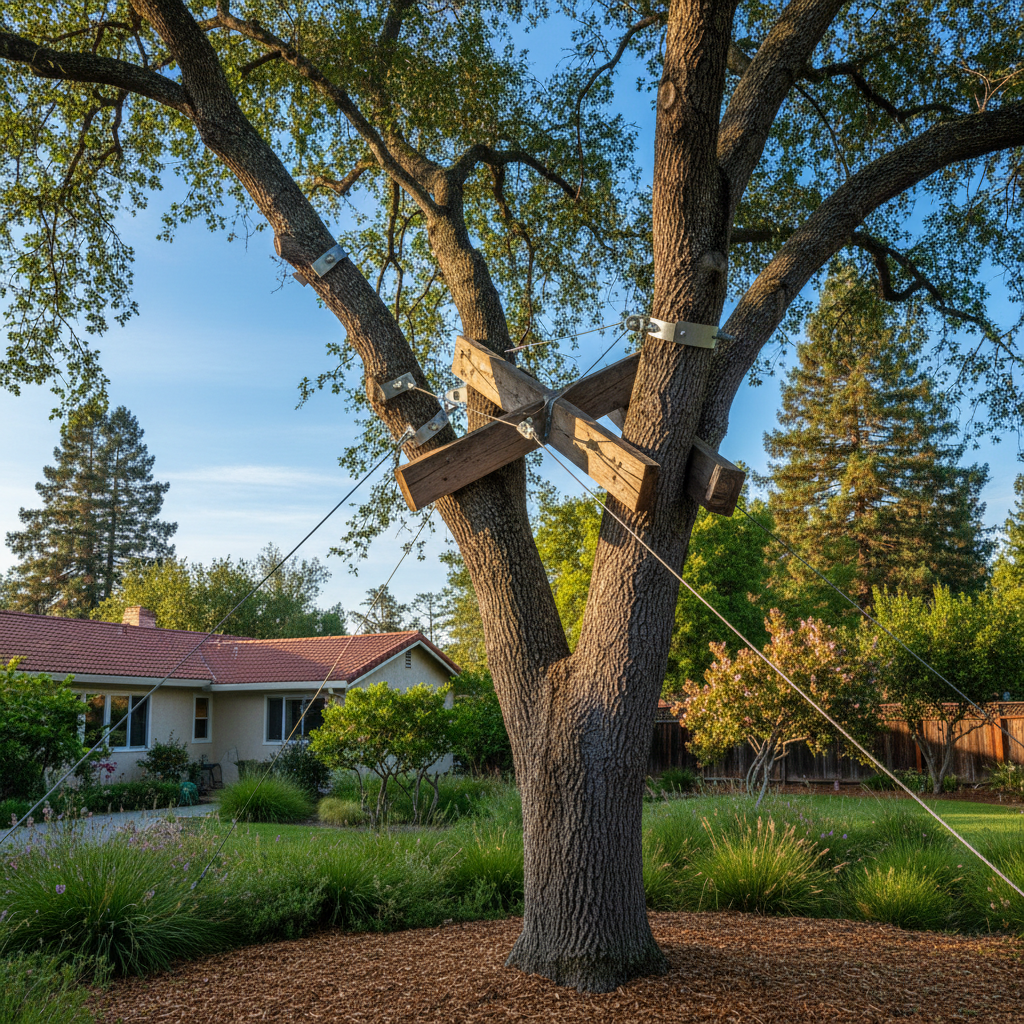
So, you've invested in cabling or bracing for one of your trees. Maybe it's an old oak with a split trunk, or a multi-stemmed liquidambar that's always looked a bit precarious. Good call. These systems are lifesavers for trees, helping them stand strong against our Bay Area winds and preventing catastrophic failures. But here's the thing: they aren't a one-and-done deal. Just like your car needs oil changes, your tree's support system needs regular check-ups.
Extending the Life of Your Tree's Support System
You want that cabling or bracing to last as long as the tree does, right? A big part of that comes down to proper installation in the first place, which is where a pro like San Leandro Tree Service comes in. But once it's up, there are things you can do. First off, keep an eye on the tree's overall health. A healthy tree is a strong tree. Make sure it's getting enough water, especially during those long, dry California summers. If the tree itself is declining, no amount of cabling will save it forever.
Another key is to avoid making changes to the tree that could impact the system. Don't go hacking off major limbs without consulting an arborist. Those cables are placed to support specific weak points, and altering the tree's weight distribution can throw everything off balance. Think of it like a suspension bridge; you wouldn't just start cutting cables willy-nilly.
What Regular Maintenance Looks Like
For most homeowners, 'regular maintenance' means a visual inspection a few times a year. Walk around the tree, look up at the cables and down at the braces. What are you looking for?
- Cable Tension: The cables should be taut, but not overly tight. If they look slack, or if you see a lot of sway in the supported limbs that wasn't there before, that's a sign something's off.
- Hardware Condition: Check the bolts, eye-hooks, and thimbles where the cables attach to the tree. Are they rusting? Are they pulling out of the wood? Is the bark growing over them too much? Sometimes, especially with younger trees, the tree can grow around the hardware, causing girdling or stressing the attachment point.
- Brace Integrity: If you have bracing rods, look for any signs of bending, cracking, or corrosion. Make sure the nuts are still tight against the washers.
- Tree Growth: This is a big one. Trees grow, and that growth can put immense pressure on the hardware. Cables and braces need to be adjusted periodically to accommodate this. What was perfect five years ago might be choking the tree now.
- Rubbing or Chafing: Make sure no part of the cable or hardware is rubbing against another branch or the trunk. This can cause wounds that invite pests and diseases.
Our San Leandro weather, with its seasonal shifts from dry heat to occasional heavy rains, can put stress on these systems. The expansion and contraction of wood, coupled with wind, means these components are constantly working.
Warning Signs You Shouldn't Ignore
Beyond the regular checks, there are some red flags that mean you need to act fast. Don't wait for your annual inspection if you see any of these:
- Visible Cracks or Splits: If the crack that the cabling was meant to support is getting worse, or if new cracks are forming near the hardware, that's a major problem.
- Sagging Limbs: If a supported limb starts to noticeably sag or droop, the system isn't doing its job.
- Loose or Broken Hardware: A snapped cable, a bolt pulling out, or a brace rod that's clearly failed means the tree is now unsupported. This is an emergency.
- Excessive Movement: During a windy day, if the supported sections of the tree are moving much more than they should, or if you hear creaking or groaning sounds coming from the tree, it's time to call someone.
- Rust or Corrosion: While some surface rust might be cosmetic, deep corrosion on cables or bolts significantly weakens them.
When to Call a Professional
Look, I'm a big believer in homeowners being proactive, but some jobs are just too dangerous or require specialized knowledge. You should definitely call a professional arborist, like us at San Leandro Tree Service, if:
- You notice any of the major warning signs I just mentioned. Don't try to fix a snapped cable yourself; it's incredibly dangerous.
- You can't easily access the cabling or bracing for a thorough inspection. Climbing high into a tree without proper gear and training is a recipe for disaster.
- You're unsure about the tension, growth, or overall effectiveness of the system. It's better to be safe than sorry.
- It's been more than 3-5 years since the last professional inspection or adjustment. Even if everything looks fine from the ground, an arborist can spot subtle issues you might miss.
Think of it as peace of mind. A small investment in professional maintenance now can save you a huge headache – and a lot of money – down the line if that tree fails. We've seen plenty of trees in neighborhoods like the Estudillo Estates that have been saved by well-maintained cabling, and plenty that unfortunately weren't because the system was neglected.